 Center for Secure Information Systems
Securing the World's Cyber Infrastructure
George Mason University

Faculty and Staff
Center Leadership
Director. Sushil Jajodia
Associate Directors. Massimiliano Albanese and Kun Sun
Center Faculty |
Associate FacultyAdministrative Staff |
Sushil Jajodia, Ph.D.
Professor & Director
|
Sushil Jajodia is
University Professor, BDM International Professor, and the founding director of
Center for Secure Information Systems in the College of Engineering and
Computing at the George Mason University, Fairfax, Virginia. He is also the
director of the NSF IUCRC Center for Cybersecurity Analytics and Automation
(CCAA).
Dr. Jajodia has made
research contributions to diverse aspects of security and privacy, including access
control, multilevel secure databases, vulnerability analysis, moving target
defense, cloud security, and steganography, as well as replicated and temporal
databases and algebraic topology. He has
authored or coauthored seven books, edited 53 books and conference proceedings,
and published more than 500 technical papers in the refereed journals and
conference proceedings. He is also a
holder of 28 patents, 17 of which have been licensed by successful startups. He is a fellow of ACM, IEEE, and IFIP; and recipient
of numerous awards including the IEEE
Computer Society W. Wallace McDowell Award. According to the
Google Scholar, he has over 50,000 citations and his h-index is 112. He has supervised 27 doctoral
dissertations; thirteen of these graduates hold academic
positions while rest are in successful industrial positions. |

|
 Top
TopMassimiliano Albanese, Ph.D.
Associate Professor & Associate Director
|
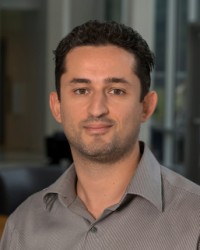
Massimiliano Albanese is an Associate Professor in the Department of Information Sciences and Technology, and the Center's Associate Director. Dr. Albanese holds a Ph.D. degree in Computer Science and Engineering from the University of Naples Federico II.
He joined the University of Maryland in 2006 as a Faculty Research Assistant before joining George Mason University in 2011. At George Mason
University, Dr. Albanese’s research interests have focused on Modeling and Detection of Cyber Attack, Network Hardening, Moving Target
Defense, and Adaptive Cyber Defense. He is Co-PI o PI on funded projects totaling about $9.5M. Dr. Albanese holds a U.S. Patent and has co-authored a book and over 60 papers
in refereed journals and conference proceedings. He is one of the three recipients of the 2014 Mason Emerging Researcher/Scholar/Creator Award, one of the most prestigious honors at Mason. Web: http://csis.gmu.edu/albanese & https://maxalbanese.com/ |
|
Kun Sun, Ph.D.
Professor & Associate Director
|
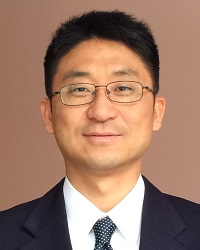
Kun Sun is a Professor in the Department of Information Sciences and Technology. He is the Associate Director of CSIS. He is also the director of Sun Security Laboratory (https://sunlab-gmu.github.io/). Kun Sun received his Ph.D. from the Department of Computer Science at North Carolina State University. He has more than 20 years of working experience in both industry and academia. His research focuses on systems and network security. The main thrusts of his research include trusted computing systems, moving target defense, software security, Internet security, AI/ML security, and cloud security. He published over 150 technical papers on security conferences and journals. He served in the TPCs of top security conferences including IEEE S&P, ACM CCS, USENIX Security, and NDSS. One paper won the NDSS Distinguished Paper Award in 2024. He was recognized by George Mason University with the Presidential Award for Faculty Excellence in Research in 2022 and College of Engineering and Computing with the CEC Faculty Excellence Award for Research in 2024. |
 |
Xiaonan Guo, Ph.D.
Assistant Professor
|
Xiaonan Guo is an Assistant Professor in the Department of Information Science and Technology at George Mason University. Before joining George Mason University, he was an Assistant Professor in the Department of Computer Information Technology at Indiana University-Purdue University, Indianapolis. Dr. Xiaonan Guo was a post-doctoral researcher in the Department of Electrical & Computer Engineering at Stevens Institute of Technology. Xiaonan received his Ph.D. degree in Computer Science from Hong Kong University of Science and Technology. His research focuses on security and privacy in cyber-physical systems, security in mobile devices, IoT, mobile sensing and mobile healthcare, and machine learning and large data analysis for mobile computing. His research has been funded by NSF and has been recognized by awards, including ACM ASIACCS’16 Best Paper Award, EAI Healthy IoT’19 Best Paper Award, IEEE ICCCN’22 Best Paper Award Runner-up. |
 |
Emanuela Marasco, Ph.D.
Assistant Professor
|
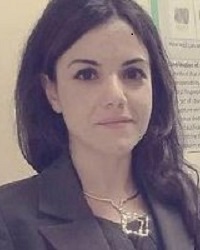
Emanuela Marasco is an Assistant Professor in the Department of Information Sciences and Technology. Before joining George Mason University, she was an Adjunct Professor and a Post-doctoral Researcher in Pattern Recognition and Biometrics at the University of North Carolina Charlotte, Department of Computer Science. From 2011-2014, Dr. Marasco was a post-doctoral Associate Researcher in the Lane Department of Computer Science and Electrical Engineering, West Virginia University. She received a five-year degree (Bachelor and M.Sc.) in Computer Engineering, in March 2006, and a PhD in Computer and Automation Engineering, in December 2010, both from the University of Naples Federico II, Italy. Her research interests focus on pattern recognition, machine learning, image processing, computer vision, and biometrics. Specifically, she is addressing vulnerabilities and challenges of biometric systems through design and development of: (1) anti-spoofing countermeasures in fingerprint recognition systems, (2) algorithms for automatic enhancement of fingerprint sensor interoperability to maintain data independence from underlying device, (3) image de-identification techniques for privacy enhancement, (4) automatic estimation of soft biometrics (e.g., age, gender) from fingerprints, and (5) adaptive schemes for human identification based on degraded DNA samples. her current sponsors are NSF, DHS and DARPA. |
 |
Jianli Pan, Ph.D.
Associate Professor
|
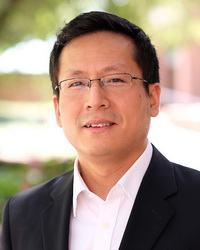
Dr. Jianli Pan is currently a tenured associate professor in the Department of Information Science and Technology at George Mason University. Previously, he was a tenured associate professor in the Department of Computer Science at the University of Missouri, St. Louis (UMSL). He obtained his Ph.D. in computer engineering from the Department of Computer Science and Engineering at Washington University in Saint Louis. Dr. Pan’s research interests broadly cover Internet of Things (IoT), edge/cloud computing, machine learning, cybersecurity, and blockchain. Dr. Pan co-authored over 60 peer-reviewed publications in high-impact journals and prestigious international conferences. His research has been funded by multiple agencies such as NSF, NSA, and NASA. Dr. Pan received 2020 “Inventor of the Year” award from the Metropolitan Saint Louis Area Bar Association and 2021 “Innovator of the Year” award from UMSL for his innovation in secure IoT systems. He also received 2018 “Junior Faculty of the Year” award and multiple “Outstanding Research” awards from UMSL for his research and contributions. |
 |
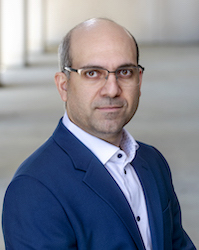
Sadegh Torabi, Ph.D.
Assistant Professor
|
Sadegh Torabi is an Assistant Professor at Department of Information Science and Technology (IST), School of Computing, at George Mason University. Sadegh is also a Research Fellow at the Center for Secure Information Systems (CSIS) at George Mason University, Fairfax, VA, USA. Sadegh's research interests are in the areas of Internet measurements, network/systems security, usable security/privacy, and operational cyber security including the security of Internet of Things (IoT) and Cyber-Physical Systems (CPS). Sadegh received his Ph.D. degree in Information Systems Engineering (with Outstanding Ranking) from Concordia University, Montreal, Canada. He also received his M.Sc. from the Electrical and Computer Engineering Department at University of British Columbia (UBC), Vancouver, Canada. During his Ph.D., Sadegh was a member of the Security Research Centre at Concordia University, where he received several awards and scholarships such as the Abdul-Aziz Hariri Graduate Scholarship in Cyber Security and the Carolyn and Brian Neysmith Graduate Scholarship. |
|
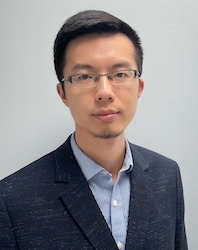
Zhisheng Yan, Ph.D.
Assistant Professor
|
Zhisheng Yan is an Assistant Professor in the Department of Information Science and Technology, School of Computing, at George Mason University. He leads the Mason immErsive meDia computIng and Applications Lab (MEDIA Lab). Previously, he was an Assistant Professor in the Department of Computer Science at Georgia State University and a visiting researcher in the Department of Electrical Engineering at Stanford University. Yan received his Ph.D. degree in Computer Science and Engineering from University at Buffalo, The State University of New York. His research focuses on the systems and security issues of immersive computing systems, such as VR, AR, imaging, and video systems. His research has been recognized by several awards, including NSF CRII Award, ACM SIGMM Best PhD Thesis Award, University at Buffalo CSE Best Dissertation Award, ACM HotMobile'18 Best Demo Award, and IEEE HealthCom'14 Best Student Paper Runner-up. |
 |
Lei Yang, Ph.D.
Assistant Professor
|
Lei Yang is currently an Assistant Professor in the Department of Information Sciences and Technology at George Mason University. Before that, she was an Assistant Professor in the Department of Electrical and Computer Engineering at the University of New Mexico. She received her Ph.D. degree and BE degree in 2019 and 2013, respectively, from Chongqing University, China. She was a Post-Doctoral Research Associate in the Department of Computer Science and Engineering at the University of Notre Dame. Dr. Yang's primary research interests lie in the joint area of Hardware/Software Co-Exploration for Neural Network Architectures, Embedded Systems, and High-Performance Computing. She is passionate about Automated Machine Learning, and System-Level Design and Optimization for Applied Machine Learning. She has authored and co-authored more than 50 research articles in refereed international conferences and premier journals. Her research has been recognized by several awards, including IEEE TCAD for the 2021 Donald O. Pederson Best Paper Award and Best Paper Award in ICCD 2017, and five Best Paper Nominations in ASP-DAC 2016/2019/2020, CODES+ISSS 2019, and DAC 2019. Web: https://leiyang0416.github.io/ |
 |
Marcos Zampieri, Ph.D.
Assistant Professor
|
Marcos Zampieri is an assistant professor in the Department of Information Sciences and Technology, School of Computing, at George Mason University. He received his PhD degree from Saarland University where he was a research associate at the German Research Center in Artificial Intelligence (DFKI). His research interests are in computational linguistics and natural language processing (NLP). Dr. Zampieri's research deals with the collection and processing of large bodies of texts with the goal of training robust NLP systems. Dr. Zampieri has published over 100 peer-reviewed papers in journals and conference proceedings and he has co-edited a dozen edited volumes, journal special issues, and workshop proceedings. |
 |
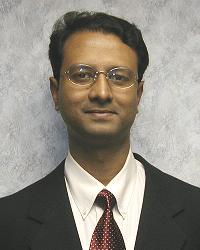
Rajesh Ganesan, Ph.D.
Associate Professor
|
Rajesh Ganesan is an Associate Professor in the Department of Systems Engineering and Operations Research. Dr. Ganesan received his Ph.D. degree in Industrial and Management Systems Engineering from the University of South Florida in 2005. His current research interests are in stochastic optimization (dynamic resource allocation using approximate dynamic programming), quality and statistics (feature detection and function approximation in high-dimensional data), and enginering education in K-12. |
 |
Hemant Purohit, Ph.D.
Associate Professor
|
Dr. Purohit is an Assistant Professor in the Department of Information Sciences and Technology. He received his Ph.D. degree in Computer Science and Engineering from Wright State University in Ohio in 2015, while also working at the Ohio Center of Excellence in Knowledge-enabled Computing before joining Mason. His current research interests are focused on addressing the fundamental problem of information overload from large-scale offline and online information sources for an individual, by modeling behavior of intentionality and comprehension using semantic computing, text mining, and applied machine learning approaches. |

|
Janet DuBose
Administrative Assistant
|
Janet joined the Center in January 2019 after a sales career with Bloomberg Industry Group. She manages the operations of our unit and provides support to our faculty members, research students and visiting scholars. |